

Why Your Research Question Matters More Than Your Topic Every strong essay and dissertation starts the same way: not with a topic, but with a question. A topic is a subject area — "social media and teenagers" — and it tells your reader almost nothing about what you will actually do. A research question is …
 by Ushbah
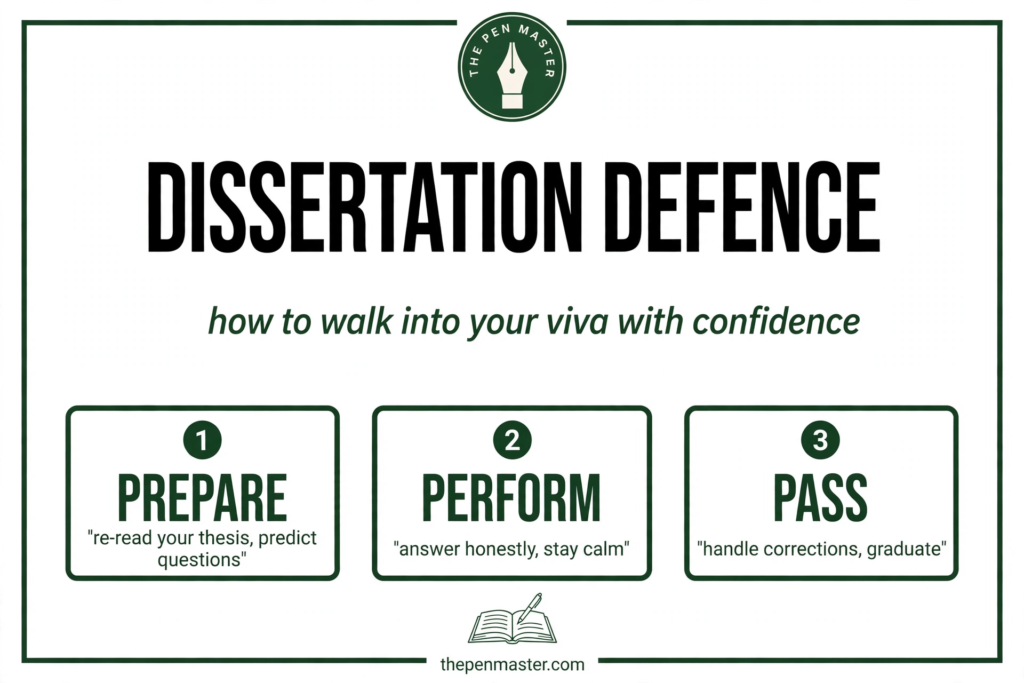
You have finished the thesis. The writing is done, the binding (or the PDF) is sorted, and now one obstacle stands between you and the letters after your name: the viva voce. Latin for “by live voice”, it is the oral defence where you discuss your work with the people appointed to judge it. Most …
by Ushbah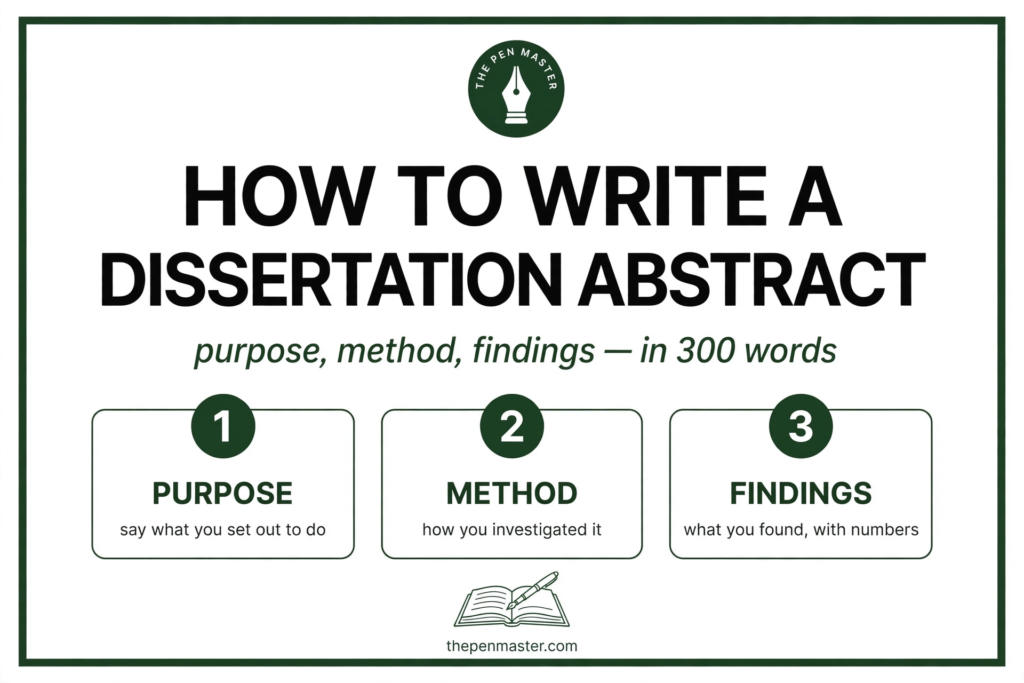
Your dissertation abstract is roughly 300 words out of 12,000 to 15,000. It is also the only part of your dissertation that nearly everyone reads. Your supervisor reads it to check the project hangs together. Your examiner reads it before anything else, and it quietly sets the standard they hold the rest of your work …
by Ushbah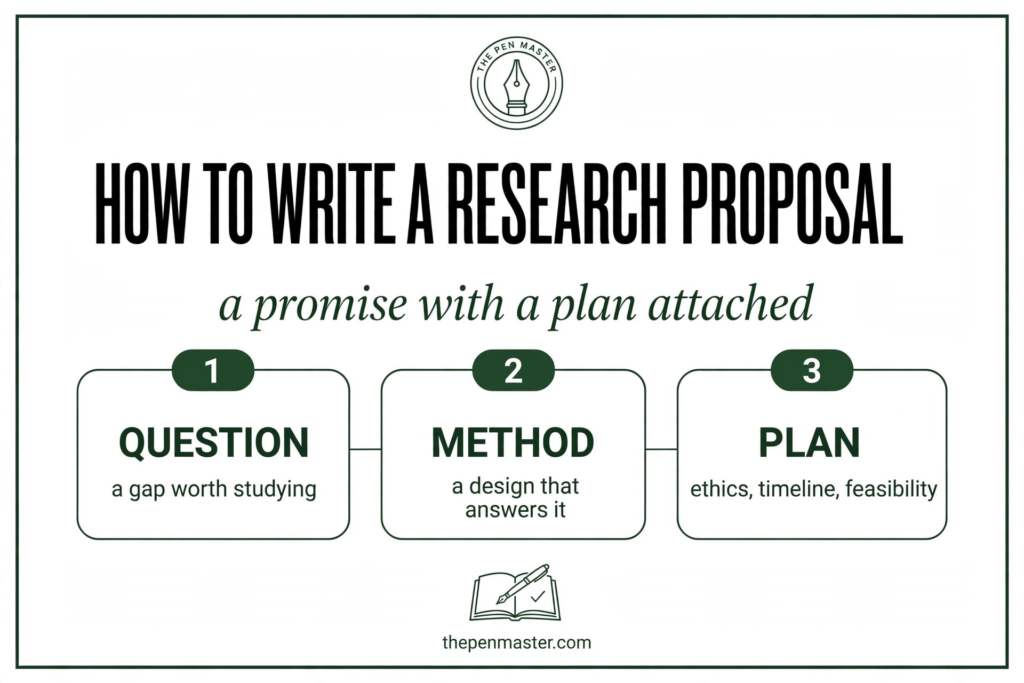
What a Research Proposal Actually Is A research proposal is a promise with a plan attached. It tells your reader — a supervisor, an ethics committee, a funding body — what you intend to study, why it matters, how you will study it, and why your approach will work. It is not the research itself, …
by Ushbah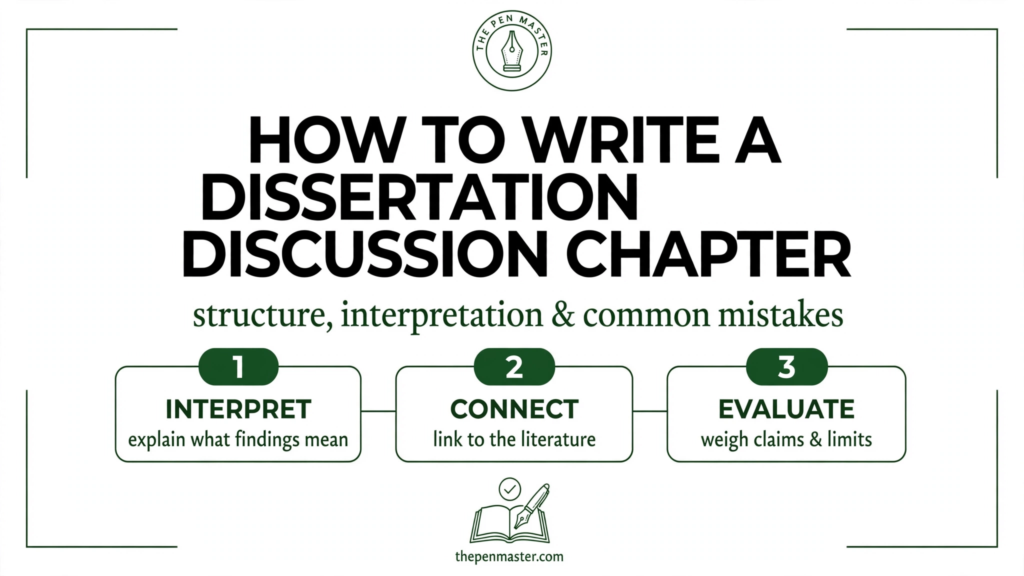
If the findings chapter of your dissertation is the evidence, the discussion chapter is the argument. It is the part where you stop reporting what you found and start explaining what it means — how it connects to the literature you reviewed, why it matters, and where its limits lie. Most examiners will tell you …
by Ushbah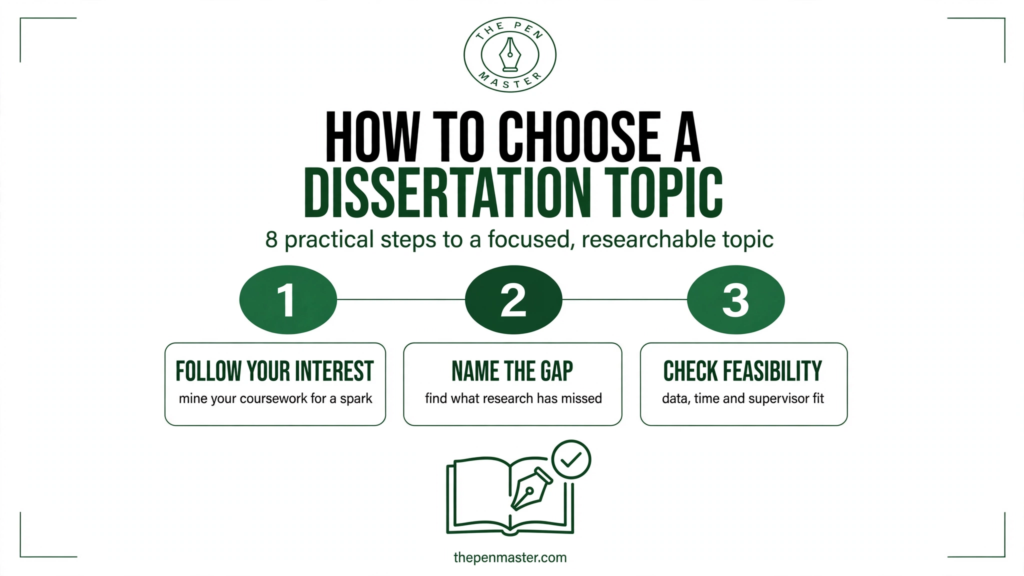
Most dissertations don’t fall apart because of bad writing. They fall apart because of a bad topic chosen in week one, when the student was guessing rather than testing: too broad, no accessible data, or a supervisor who can’t advise on it. Picking well isn’t luck — it’s a short, methodical process. We’ll work through …
by Ushbah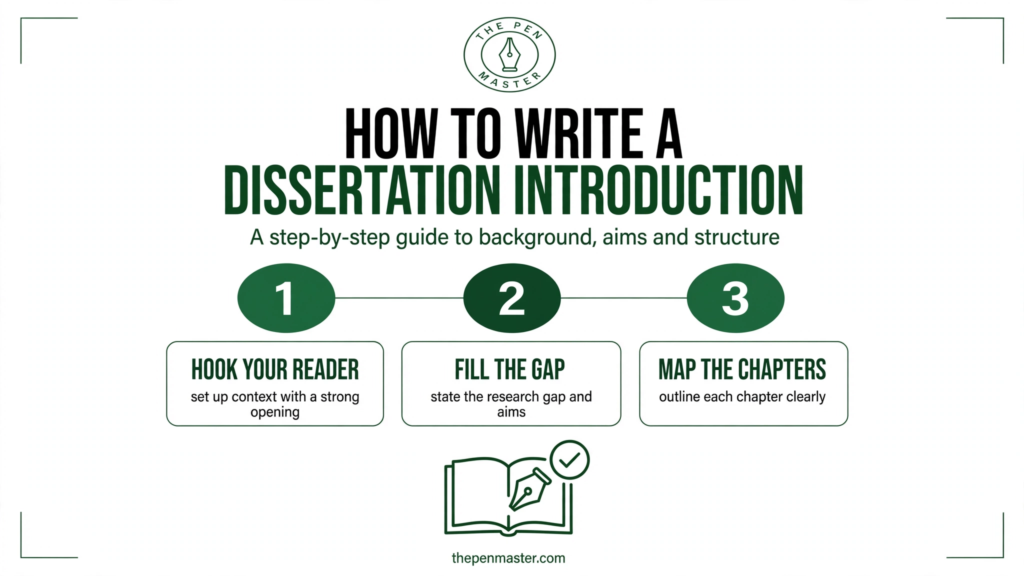
Why the Introduction Feels So Hard to Write It’s ten per cent of your dissertation — maybe 1,000 to 1,500 words — yet students agonise over it more than over the analysis chapter that takes ten times as long. The introduction is the only chapter everyone reads twice: your supervisor reads it to decide what …
by Ushbah
The conclusion is the last chapter you write and the first one a tired examiner reads closely. By that point they have waded through your literature review, your methodology, and sixty pages of findings. The conclusion is where they decide, almost unconsciously, what grade this dissertation deserves — it is the chapter that turns a …
by Ushbah
The methodology chapter is where examiners decide whether your research is trustworthy. Your introduction made promises, your literature review mapped the field — but the methodology is where you prove you knew what you were doing when you collected your data. A weak methodology makes even strong findings look suspicious. A strong one makes your …
by Ushbah
Few chapters cause as much quiet panic as the literature review. You have read dozens of papers, your desk is buried under PDFs, and now you are supposed to turn all of that into one coherent chapter. Most students go wrong in the same place: they treat it as a summary of everything they read, …
by UshbahInput your search keywords and press Enter.