

A case study is one of the most misunderstood assignments at university. Students treat it like a story — a long retelling of what happened — and then wonder why the marker gave them 55%. The truth is that a case study is an argument built on evidence. You are not just describing a case; …
 by Ushbah
Most dissertations don’t fall apart because of bad writing. They fall apart because of a bad topic chosen in week one, when the student was guessing rather than testing: too broad, no accessible data, or a supervisor who can’t advise on it. Picking well isn’t luck — it’s a short, methodical process. We’ll work through …
by Ushbah
When You Need APA (And When You Don’t) APA — the referencing style of the American Psychological Association — dominates psychology, education, nursing, and the social sciences. It is the default at most US universities and widely used across Australian universities, especially in health and education programmes. UK universities tend to favour Harvard instead, which …
by Ushbah
Why the Introduction Feels So Hard to Write It’s ten per cent of your dissertation — maybe 1,000 to 1,500 words — yet students agonise over it more than over the analysis chapter that takes ten times as long. The introduction is the only chapter everyone reads twice: your supervisor reads it to decide what …
by Ushbah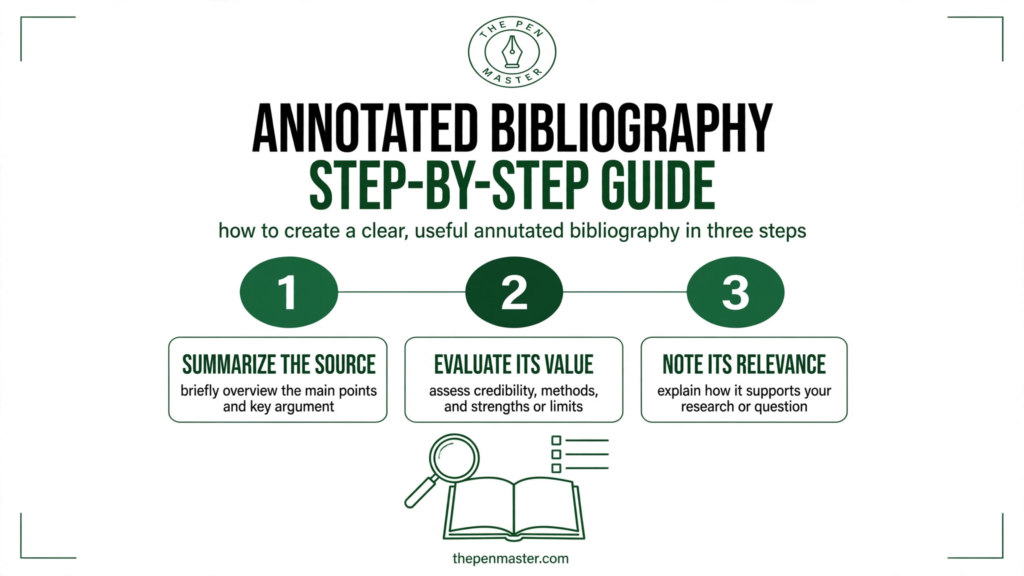
Your lecturer just asked for an annotated bibliography, and half the class is quietly Googling what that means. The short version: it’s a list of your sources, each followed by a short paragraph saying what the source argues, whether it’s any good, and how it helps your assignment. It’s not a reference list with padding, …
by Ushbah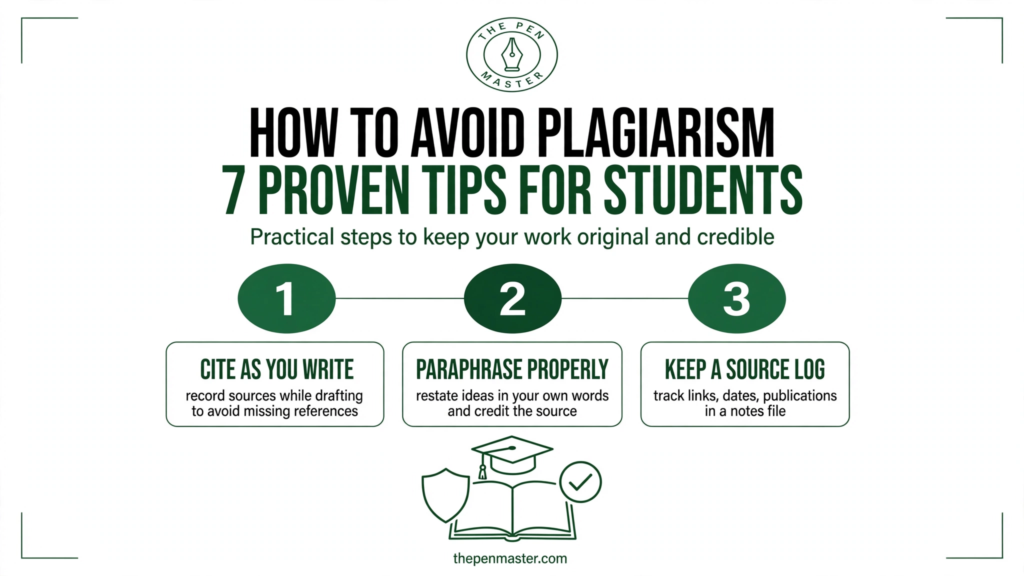
Every year, thousands of students who never intended to cheat end up in academic misconduct hearings. They paraphrased from memory and forgot the citation. They reused a paragraph from their own first-year essay. They and a friend "worked together" on what was supposed to be individual work. To a disciplinary panel, intent barely matters: the …
by Ushbah
Most students treat paraphrasing and quoting as interchangeable ways of borrowing someone else’s ideas. They’re not. A paraphrase shows your marker that you understood the source well enough to restate it. A quote shows them the original wording was too precise, too famous, or too load-bearing to touch. Mix them up and your essay becomes …
by Ushbah
The conclusion is the last chapter you write and the first one a tired examiner reads closely. By that point they have waded through your literature review, your methodology, and sixty pages of findings. The conclusion is where they decide, almost unconsciously, what grade this dissertation deserves — it is the chapter that turns a …
by Ushbah
If a UK study exchange is on your horizon for 2026–27, the paperwork just got simpler. From Thursday 8 October 2026, the UK’s Immigration Rules build in specific exemptions for students taking part in the Erasmus+ programme — the first immigration step in the UK’s return to the programme, with full association resuming from 1 …
by Ushbah
The methodology chapter is where examiners decide whether your research is trustworthy. Your introduction made promises, your literature review mapped the field — but the methodology is where you prove you knew what you were doing when you collected your data. A weak methodology makes even strong findings look suspicious. A strong one makes your …
by UshbahInput your search keywords and press Enter.